- Paperback: 400 pages
- Publisher: St. Martin's Griffin; 1st edition (June 12, 1999)
- Language: English
- ISBN-10: 0312206674
- ISBN-13: 978-0312206673
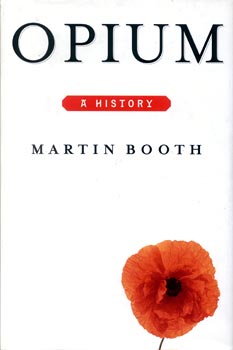
Professional Review from Publishers Weekly: Veteran British author Booth takes us from P. somniferum to "black gold," compellingly documenting the influential role of the opiate trade throughout history. British colonizers, for example, used both legal and illicit opium production as a chief source of revenue in India, while for Dutch, British and Portuguese traders opium was a means to pacify and carve up China. The CIA's alleged drug-dealing exploitsAto finance covert operations and to bribe local leadersAare also amply documented here. Although Booth delves into the opiate-taking habits of Graham Greene, Wilde, Cocteau, Dickens, Poe and Coleridge, he doesn't romanticize drug use. While the facts can be rather dry, his comprehensive, nation-by-nation survey of international narcotics traffickingAwhich he views as a global societal disorderAmay deter potential initiates. This history of the mechanics of the heroin trade industry brings us right to the present, where the market for the drug, Booth argues, is tied up with legitimate global trade.
Customer Review from Amazon.com: Booth writes a truly fascinating and detailed history of opium's influence on the world's history, economies, and cultures. According to the author, opium has been used by man since prehistoric times. It was already under cultivation in Mesopotamia by 3400 B.C. He describes the wars that have been fought to control the opium trade, and nowadays the multi-billion dollar heroin industry. Nor does he neglect the social implications of an addicted population:
"For many addicts, heroin is favoured because, whilst allowing them to maintain full consciousness,
Customer Review from Amazon.com: Booth writes a truly fascinating and detailed history of opium's influence on the world's history, economies, and cultures. According to the author, opium has been used by man since prehistoric times. It was already under cultivation in Mesopotamia by 3400 B.C. He describes the wars that have been fought to control the opium trade, and nowadays the multi-billion dollar heroin industry. Nor does he neglect the social implications of an addicted population:
"For many addicts, heroin is favoured because, whilst allowing them to maintain full consciousness,
they can withdraw into a secure, cocoon-like state of physical and emotional painlessness. Heroin is seen as an escape to tranquility, a liberation from anxiety and stress: for the poor, it is a way out of the drudgery of life, just as laudanum was for their forebears two centuries ago."
If much of your recent reading has been driven by current events, this book will open your eyes to the cultivation and processing of `papaver somniferum' throughout the `Golden Crescent' - a geographical area from Turkey to Tibet that includes the mountains of Iran, Afghanistan and Pakistan.
If much of your recent reading has been driven by current events, this book will open your eyes to the cultivation and processing of `papaver somniferum' throughout the `Golden Crescent' - a geographical area from Turkey to Tibet that includes the mountains of Iran, Afghanistan and Pakistan.
According to the reviews and the description, this book offers a detailed account the opium wars.

No comments:
Post a Comment