- Hardcover: 336 pages
- Publisher: Yale University Press (March 17, 2009)
- Language: English
- ISBN-10: 0300141092
- ISBN-13: 978-0300141092
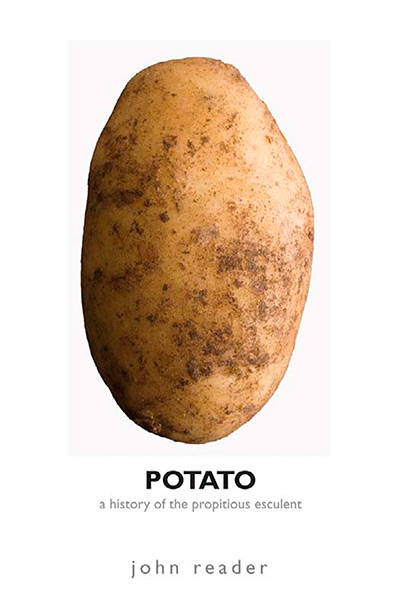
Professional Review from The New Yorker: This enjoyably meandering history looks at the potato as a plant of paradox. It has been revered as an aphrodisiac and feared as a cause of leprosy. Populations rise dramatically wherever it is introduced, but reliance on it “ensnares more people in poverty than it lifts out.” Reader traces the evolution of the potato from poisonous Andean weed to global staple, offering adept disquisitions on whatever captures his attention: the mysterious origins of agriculture, the economic history of Peru, the domestic arrangements of the Irish. There are glimpses of the Reign of Terror, when the ornamental gardens of the Tuileries Palace were planted with potatoes, and the Great Potato Boom of 1903 and 1904, when an investment bubble grew as a result of false claims made for a potato strain known as Eldorado. This is a story of invisible systems and unintended consequences, concerned with how the New World transformed the Old.
Copyright ©2008 Click here to subscribe to The New Yorker
Customer Review from Amazon.com: Before I read this book, I knew that potatoes came from South America, that the Spanish brought them to the new world, that there was an Irish potato famine that drove many Irish to emigrate to America, and that french fries and potato chips aren't the healthiest foods. I have grown potatoes in my garden, so I know that there are different varieties to choose
from, different sizes, shapes, colors, cooking qualities, tastes, and ripening times, and that one should
not plant them in the same place repeatedly, although I've never had a problem, and they come up in
the same place on their own the next year anyway. I knew about the role M. Parmentier played in popularizing the potato in France, and about the French potato dishes that bear his name today. But as for all the rest of the history of the potato...I had absolutely no idea. I found this book absolutely fascinating. We so take the potato for granted, that big bulging brown thing that we bake or mash or fry, or the red "new potato" that we boil and use for more delicate purposes. (The French have access to and enjoy a much wider range of nuanced varieties.) I did not realize the impact the potato has had
on various societies, its importance all over the world, its development as a useful, modern crop, and
the huge volume of potatoes grown today. I had no idea that the Chinese grew potatoes, as potatoes don't appear on Chinese restaurant menus. I had no idea of the extensive efforts to breed useful varieties, and to find solutions to the late blight that caused the Irish famine. I had never thought about wild potatoes and their characteristics. The more one learns about something, the more interesting it becomes. This book has given me tremendous respect for the potato and for all of the people that have contributed to making it the tuber we know and love today. Super book.
This book appears to highlight the Importance of the potato in shaping certain historical events.
on various societies, its importance all over the world, its development as a useful, modern crop, and
the huge volume of potatoes grown today. I had no idea that the Chinese grew potatoes, as potatoes don't appear on Chinese restaurant menus. I had no idea of the extensive efforts to breed useful varieties, and to find solutions to the late blight that caused the Irish famine. I had never thought about wild potatoes and their characteristics. The more one learns about something, the more interesting it becomes. This book has given me tremendous respect for the potato and for all of the people that have contributed to making it the tuber we know and love today. Super book.
This book appears to highlight the Importance of the potato in shaping certain historical events.

No comments:
Post a Comment